What first drew you to this field—was it the technical challenge or something else?
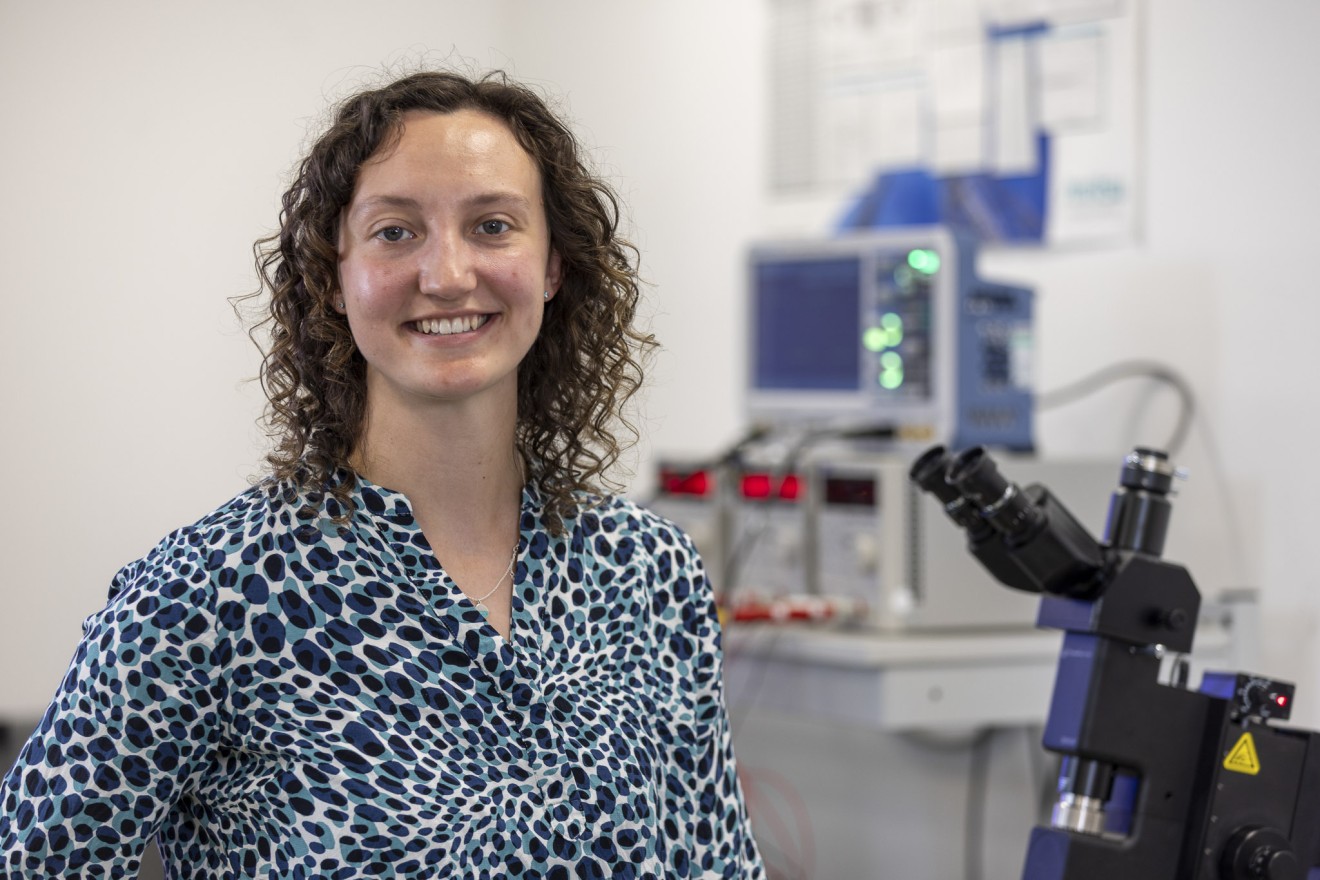
I’ve always wanted to understand how things work. I chose to study Mechatronics at the University of Glasgow because it is a mix of mechanical, electronic, and control engineering. I wanted to understand how these interconnected elements fit together in complex technology systems.
How did you end up in your current role?
As part of my degree, I took an honours microwave engineering course. Some of the theory was very demanding but I found it very interesting, and I wanted to learn more about the practical applications. I applied to Leonardo for a Master’s project in this area to get hands-on experience – and I’ve never looked back!
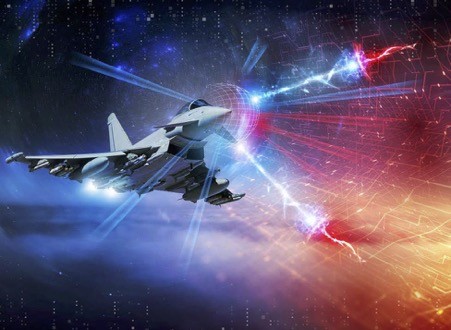
After graduating in 2023, I joined the MMIC team (Monolithic Microwave Integrated Circuits). We design and test the technology used in the front end of the radar. It’s been a great opportunity to work on the ECRS Mark 2 radar for the Eurofighter Typhoon.
A lot of companies say they do cutting-edge work, but Leonardo really does. I’m part of a team that is genuinely pushing the boundaries.
Did you know much about radar systems or Eurofighter before joining Leonardo?
Not a lot. The university microwave course was very theoretical and mathematical. It was only after I joined Leonardo that I discovered the multiple practical applications and the level of innovation in this field. A lot of companies say they do cutting-edge work, but Leonardo really does. I’m part of a team that is genuinely pushing the boundaries.
What does your day-to-day role involve?
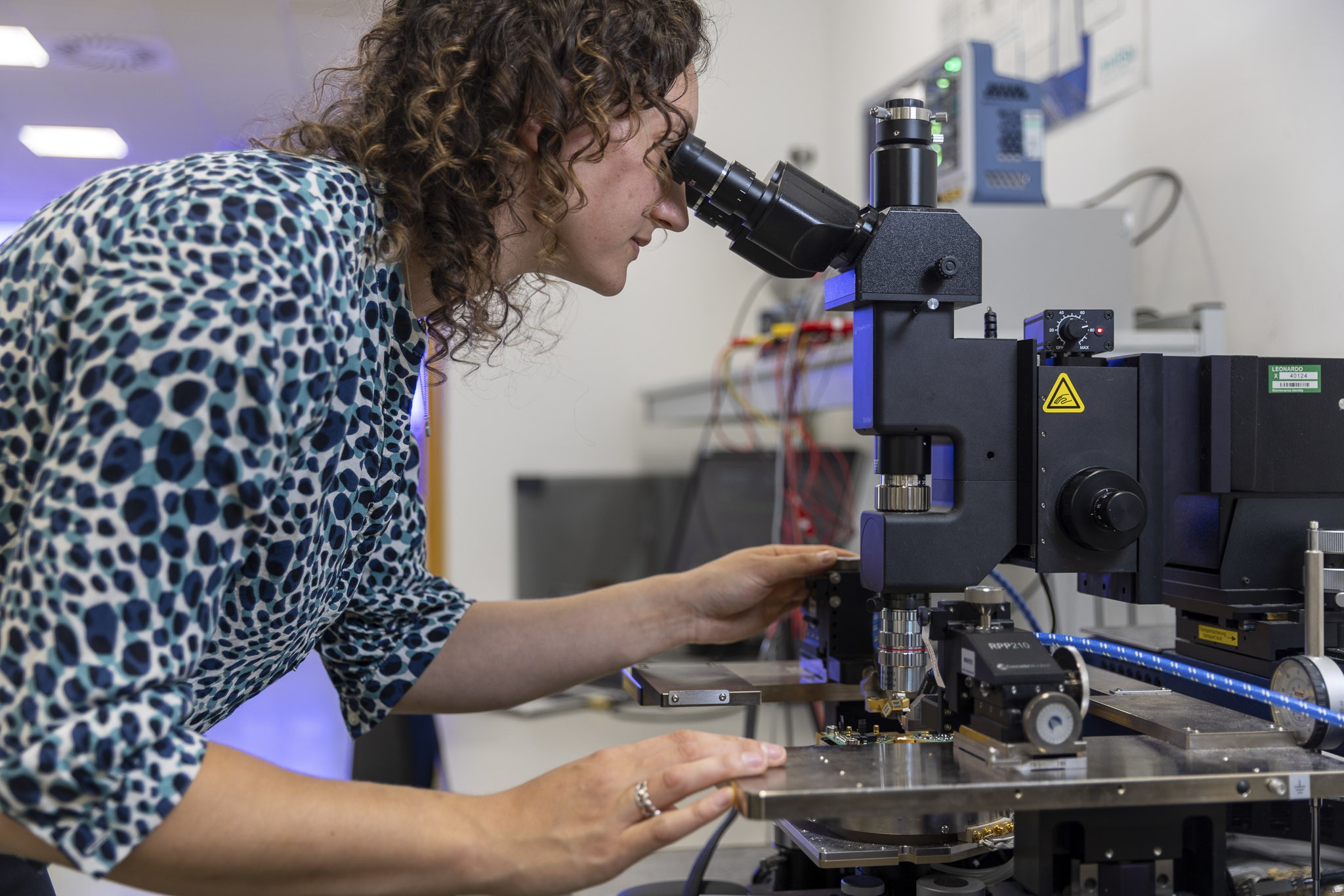
It really varies, which I enjoy. Early on, I was working mainly in the lab creating setups for MMIC testing, writing code, and automating test routines. Because of this testing, I learnt a lot about the fundamentals of how our devices work. More recently I’ve moved into design work modelling our devices and using simulation tools, often for early-stage future concepts.
For the Mk2 radar project I’ve been working on environmental testing and qualification, which involves more collaboration with other departments. It is exciting to be involved with the Eurofighter project working on something that’s going into production. There’s something very tangible about it. You can see the end product, you know who it’s for.
How important is collaboration in what you do?
It’s essential. The Eurofighter radar is such an advanced technical project and multiple specialists have to contribute. Once a prototype is tested, the data we get back from that process informs what can be improved. Working together with the customer, we look to ensure the capability meets their operational needs. It’s a loop — constantly learning, evolving, and improving.
What skills are essential in your role?
A willingness to learn, and the ability to talk to people and ask questions. You need to be able to connect the dots from the tiny technical details to the bigger context, and stay adaptable. And something else I’ve learned, you have to stay calm. You will encounter problems and that can be daunting at times.
But finding solutions to problems is actually what engineering is all about. When you realise this, you appreciate that problems are not bad, they are just part of the process of developing new technology. A thorough approach is also essential to get accurate test results. For meaningful data, calibration is key. You have to ask: are these results from the device itself, the test system, or the environment? It takes time and care.
Finally, teamwork. Being around people helps me learn — you pick up small tips from conversations, things that wouldn’t come up over email or video calls. I prefer being in the office or the lab. It helps me understand how everything fits together, from individual components to the aircraft radar system itself.
How does it feel to be part of the Eurofighter programme and developing a radar that will be in service for years to come?
It feels very different from other projects I’ve worked on because of the scale and the collaboration with a big team. There’s a real ambition, drive, and enthusiasm in the team. Everyone wants to deliver something excellent.
Ultimately, it’s about enhancing pilot capability and delivering advanced systems they can rely on. Personally, it is exciting to be here during the design and development phase. These projects are long and don’t come around often. They will be used for a long time too. I feel very lucky to be part of this transitional and innovative phase.
And how do you relax away from work?
I row competitively. I took up the sport at university and competed for Scotland and GB. I had a break while finishing my degree, but when I moved to Edinburgh, I joined a local rowing club to get back into it. It’s great to meet people outside of engineering and be competitive in a different way. It actually helps me switch off. You can’t think about lab tests when you’re rowing. You just focus on the technique or the sound of the water – it’s almost mindfulness.
I think the two sides — engineering and rowing — complement each other. I couldn’t do either as well without the other. Last year, I was able to row for Scotland at the Home International Regatta while working at Leonardo, which was fantastic. The company was really supportive.