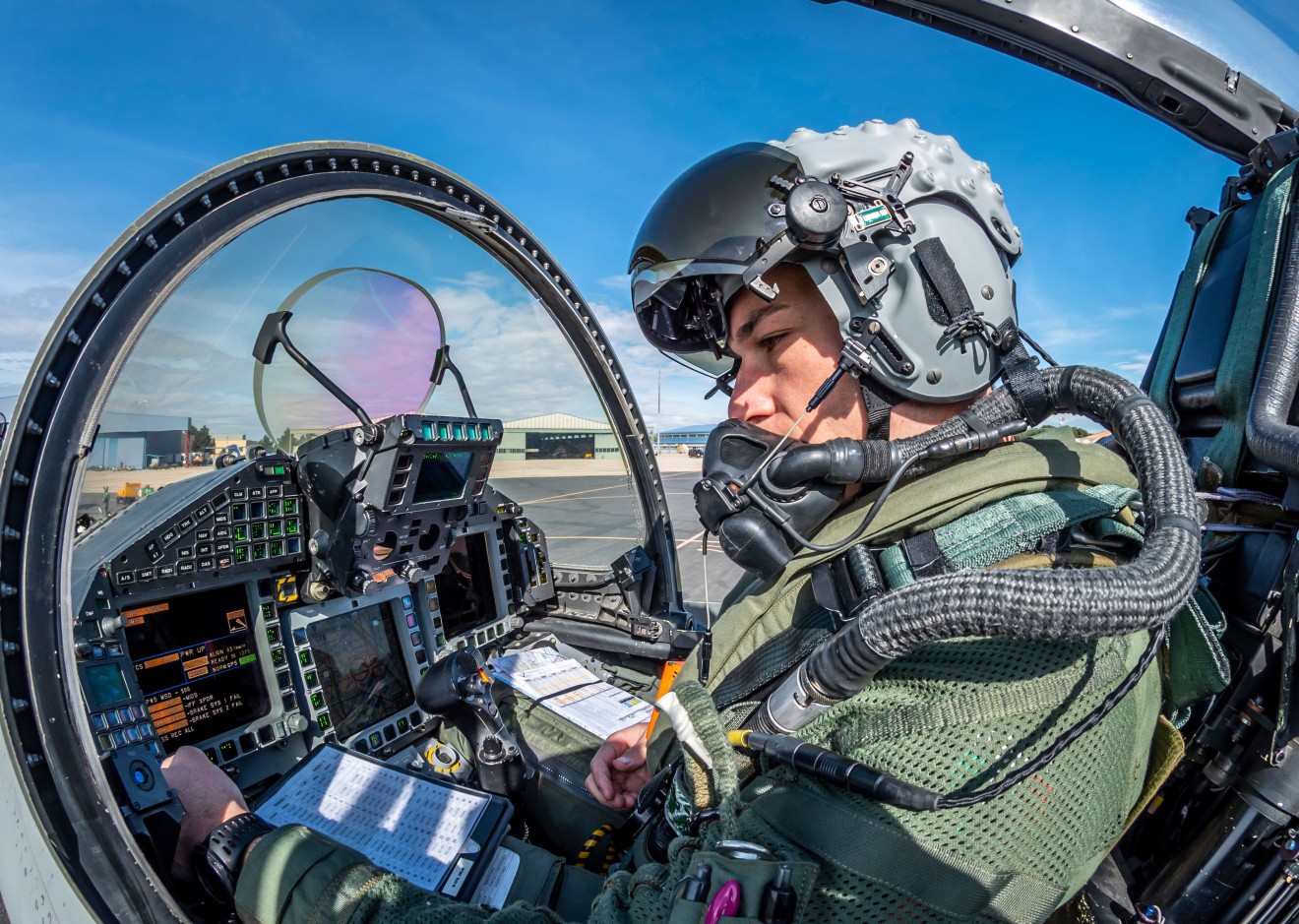
How has data changed the way pilots fly Typhoon?
Completely. Today, Typhoon pilots rely on advanced systems that simplify a lot of complex data streams. The Striker II helmet, for instance, integrates radar, sensor, and data link information directly into the pilot’s line of sight. This reduces the need to look at cockpit displays, allowing pilots to stay focused on the mission. The weapon system ensures that a pilot will always have critical information at their fingertips, giving them the confidence to make rapid decisions in a high-pressure environment.
Flying a Typhoon isn’t just about flying skills — it’s about mastering the data. And today’s pilots are data-driven decision-masters
How does Typhoon prevent data overload?
Typhoon is designed to simplify decision-making. Pilots can customise their displays to show only relevant data for specific tasks, such as engaging a target or coordinating with ground forces. Intuitive shortcuts allow them to access critical information with a single button press, ensuring they aren’t distracted by unnecessary details. It gives the right balance between information availability and simplicity. It ensures that pilots can act decisively without being overwhelmed.
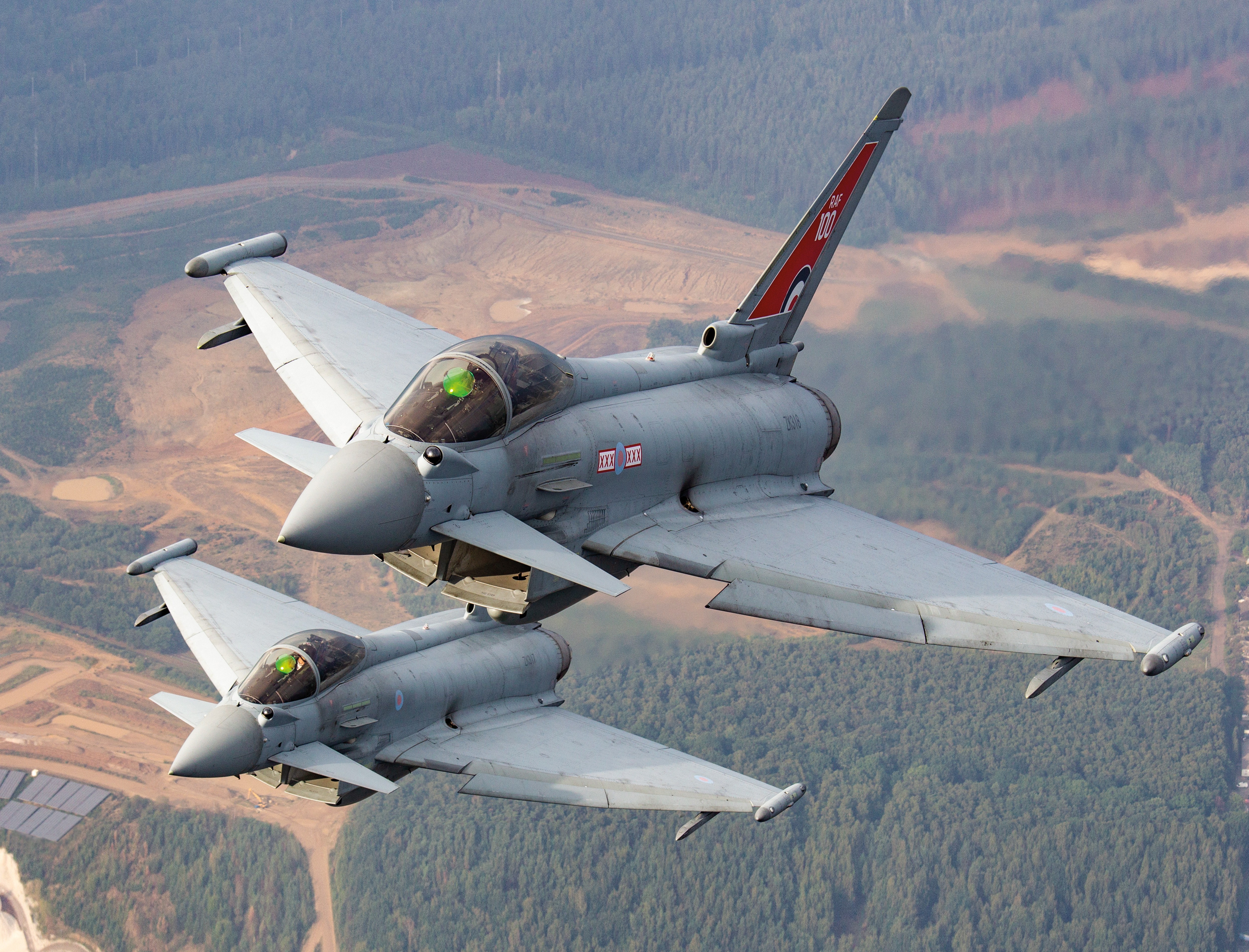
Where does the information come from?
Short answer, there are multiple sources. For instance, in high-risk scenarios, pilots might receive inputs from AWACS, allied aircraft, ground controllers, other aircraft and more. What the aircraft does is fuse it together to ensure they have a comprehensive view of the battlefield. It allows them to adapt quickly, whether shifting from air-to-air combat to ground support or responding to unforeseen threats. The ability to receive, share and act on data collectively with allied forces means that Typhoon pilots are key members of a unified and effective combat strategy.
How does this technology help when it comes to different missions?
It gives you in-built flexibility. Typhoon’s systems allow pilots to switch seamlessly between roles during a mission. For example, a pilot engaged in close air support can quickly shift to air-to-air combat without missing a beat. Obviously, you need intuitive systems that are able to present any new mission-critical information instantly. In dynamic environments, you can’t wait for data to build — you need it there and then and in a format that’s understandable to make decisions and adapt.