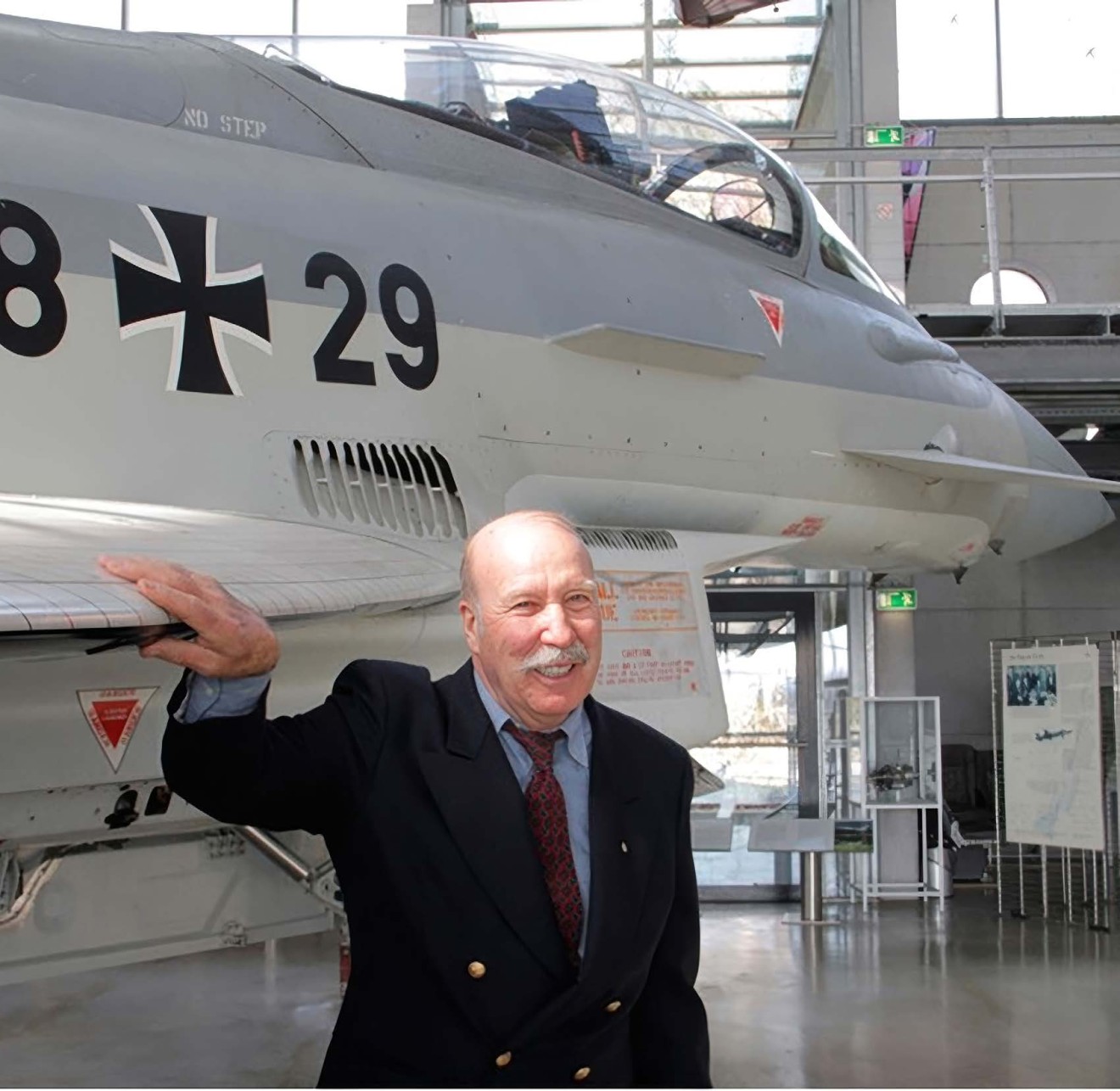
The aircraft was ready. The cameras were ready. The telemetry rooms were ready.
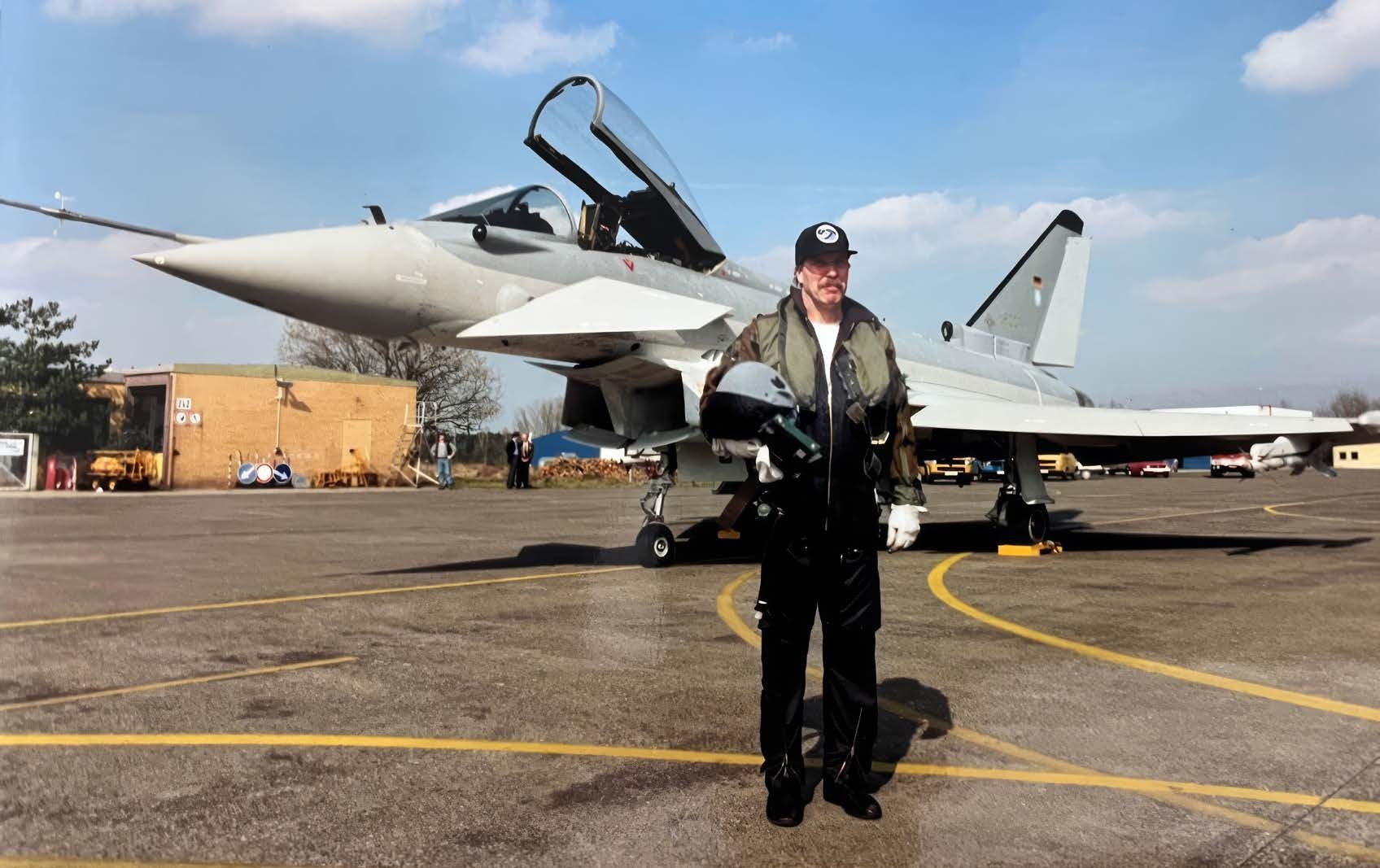
Then you climb the ladder, settle into the seat, and the familiar sequence begins: helmet, gloves, kneeboard, cockpit setup, engine start, time checks, taxi. The same routine as the test runs before, because on a first flight you do not chase theatre, you chase discipline.
Even the smallest details mattered. If you watch the video, you might notice DA1 was not quite straight in the shelter. I brought it back onto the yellow taxi line for the live cameras. It sounds trivial, but it was part of the mindset. Get the basics right, every time.
Of course, it was a special moment. I felt calm and collected but in a high state of concentration. Because DA1 was in excellent technical shape, maintained and prepared for the first flight as well as any aircraft can be. The external set up was equally thorough: air traffic control, the test area, the chase aircraft, and support teams. In telemetry, experts were already monitoring all the essential technical data. In short, everything was in place. You may be the one in the cockpit, but you are never alone on a first flight.
And yet, no matter how many reviews you sit through, there is always a part you cannot rehearse.
A few days before the flight, our CEO Hartmuth Mehdorn asked me directly: “Herr Weger, können wir sicher fliegen?” Can we fly safely? It was not a slogan. It was a question that carried the full weight of responsibility. Because this flight was never only about aviation. If some- thing went wrong in that first flight period, the damage would not stop at the aircraft. It could be detrimental for the entire programme. Only after you have taken off do you fully understand what that means.
What we did not know
We had confidence in what we knew. The Iron Bird ground test vehicle was close to the real aircraft in terms of handling and control, and it gave us a strong baseline of what to expect.
I knew the RB199 engines. The cockpit was a preliminary Tornado flight deck, familiar in important ways. I had also flown the EAP (Experimental Aircraft Programme), and that helped, but it also sharpened the real question: what will Eurofighter be like in the air, not just on paper?
We also knew about the ground handling characteristics of the aircraft up to lift off speeds, and we had worked through things like drag chute behaviour and barrier engagements should we need it.
What we did not know was the unknown, the unexpected. Every first flight carries that, and pretending otherwise is the quickest way to get into trouble.
There was another reason discipline mattered so much. It had been decided to fly DA1 with reduced functionality, as the flight control system was not fully developed at that stage. That resulted in a split flight envelope: low speed with the gear down and high speed with the gear up, with only a narrow overlapping corridor between the two.
It also meant operating with a non-standard take-off sequence: cancelling reheat at lift-off, leaving the gear down, and climbing at a constant 190 knots into that split envelope. As a test pilot, you train for exactly this kind of abnormal situation.
The day itself
On Sunday, 27 March, there was a last-minute briefing at 10:00, attended by all crews. After that, I locked myself in my office and went through the flight over and over in my head: take off sequence, timing with the chase aircraft, flight profile, test points, and last-minute system limitation changes. Over and over, until the sequence felt as familiar as a routine sortie, even though nothing about it was routine. I also spent time in the cockpit. It felt comfortable. My favourite office, you could say.
On the day, I strapped in with the same routine as always. The aircraft was prepared, the team was ready, and the system around the flight was designed to support good decision-making. Then in the air, the flight test schedule was flown as planned, as written in the flight test report. That is exactly what you want to be able to say about a first flight.
There were still moments that stay with me. As you might expect, the weather did not follow the script. An overcast cloud layer sat right in the departure sector and forced an impressively steep climb to reach the only hole in the sky. It was not part of the plan, but it was managed, cleanly and without hesitation.
There was also a small mishap that was more human than technical. The photo chase aircraft seemed to get a little carried away and crossed my nose too close.
Pressure, on and off the runway
People often ask about the pressure. I was aware the first flight was absolutely special. The local press wrote that “Test Pilot Weger Eurofighter Programme News and Features is already in love with EFA”, even before it ever flew. In German, EFA sounds like Eva, a girl’s name, and they enjoyed that. Thousands of people were hanging on the airport fences.
Behind that attention was something more serious. A crash during the first flight period would have been detrimental for the total programme. You do not have to dramatise that. It is simply true, and everybody involved understood it.
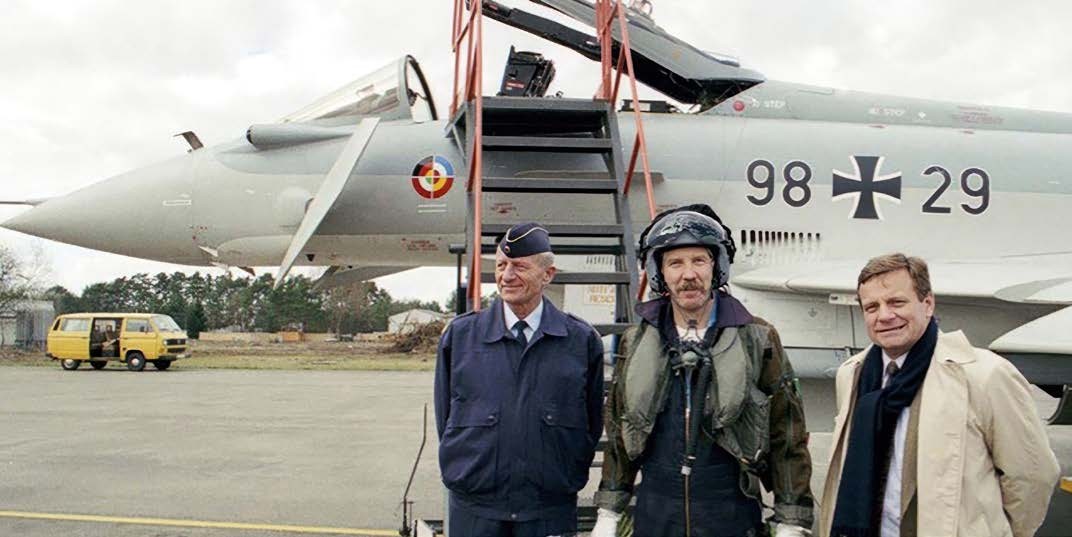
After landing, the wider world arrived quickly. My crew chief climbed up the ladder with flowers, and we stood there smiling, tapping shoulders, relieved and happy. I stepped down the ladder, received another bunch of flowers, and then received congratulations from the Chief of Staff, General Kuebart, and the CEO, Mehdorn. Suddenly, I seemed to be everybody’s darling!
It is a nice memory, but the feeling underneath it was simple. Relief. Not because we had done something flashy, but because we had done something foundational, and we had done it safely.
Beyond the airfield
Any new fighter development programme is political, and Eurofighter was especially so. The Berlin Wall fell in 1989, the Cold War ended, and Germany reunified in 1990. There was a strong public mood of “never again war”.
Interest in a new fighter was low, almost non-existent. Even our Minister of Defence at the time, Volker Rühe, had called the programme dead. Industry slowed down the development programme. On top of that, we inherited 24 former NVA MiG-29s, and some people asked bluntly: if you have MiG-29s, who needs Eurofighter?
In that climate, the first flight was more than a technical milestone. It was a statement of intent. Industry woke up, because we had to set the mark. We had to demonstrate that Eurofighter was the best solution for a future air superiority fighter aircraft. And we had to do it fast.
The German media was not overly enthusiastic about the first flight. However, it captured the attention on the world stage. We presented early results at an experimental test-pilot symposia in Los Angeles and Europe, and you could feel the interest and respect.
Looking back now, yes, it feels different knowing that first hour led to a million more. But even then, I knew I was piloting an incredible aircraft and that we had something special. It was one of those days you remember for the rest of your life.
We had worked hard on the design of the flight control laws, on flying qualities and handling, on cockpit layout, and on outside visibility in a 9G environment. It felt like a great air superiority fighter was born.
Years later, watching Typhoon displayed at Farnborough and Le Bourget, I witnessed the unmatched manoeuvrability, precision and performance. I remember that while the pilot Chris Worning was showing off Typhoon’s display, I was “sentenced” to fly a Dornier 328 regional airliner display right after him.
A very different kind of flying, a slow roller coaster compared to what Typhoon could do. But, hey, that’s fine, Chris got the airshows, I had the first hour.
A message to today’s pilots
To the pilots flying Eurofighter Typhoon today, my message is simple: the platform is exceptional, and it was designed that way. The delta canard design and the intentionally unstable concept are ideal. Maximum effort was put into first-class flying qualities, low and high-speed manoeuvrability, and performance. It is a perfect platform, and it remains acceptable for future systems and avionics updates, including whatever comes next.
Eurofighter is now more than 30 years old, and it is certainly not at the end of its career. It will stick around for years to come.
That is why the first hour still matters. Not because it makes a nice anniversary. Because it was the start of a story that lasted, hour after hour, across decades.