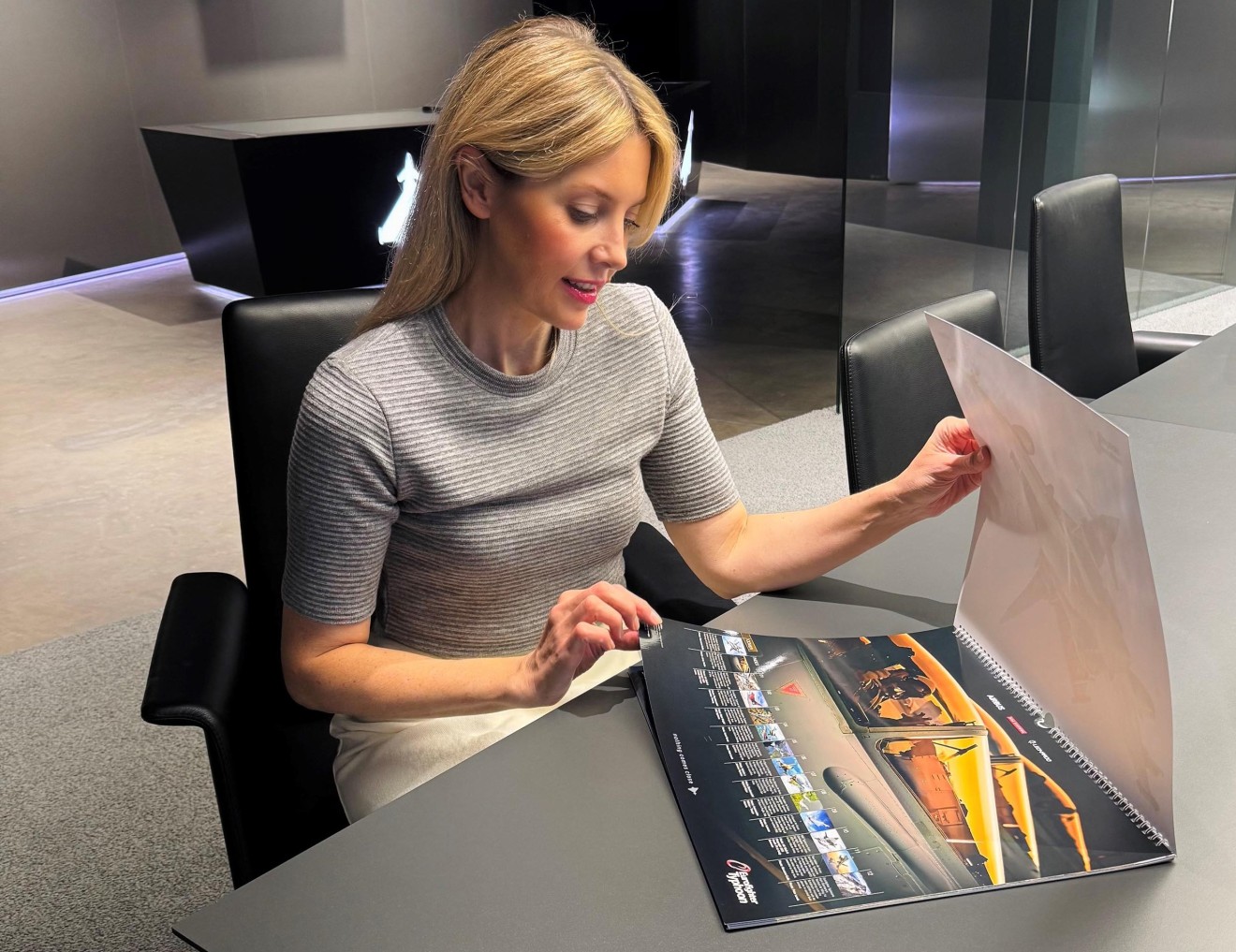
Martina, what makes the calendar such a sought-after item in the aviation world each year?
People want to see Eurofighter in action, and that’s exactly what our incredible air-to-air images deliver. The Eurofighter Calendar captures the aircraft in such captivating moments, and there’s something special about that. It always makes me happy to see the calendars hanging on our customers’ or partners’ office walls.
Can you walk us through the process – when does planning for the next calendar typically begin?
Throughout the year, we receive images from talented aviation photographers, but we actually start the process in the springtime by collating the artwork collection. Then we move into the creative selection process for the 14 photos, which consist of the 12 calendar months, one cover image, and one index page. We work closely with multiple teams, including our graphic design partners who coordinate the printing, to ensure the best quality possible.
What’s the most challenging part of bringing it all together?
For me, it’s narrowing down the images to just 14 from a long list of about 30. It’s never easy. Often, it comes down to the smallest details – a subtle quality that makes one image stand out.
How do you decide which images make the cut for each month — are there any rules?
We want each image to showcase the Eurofighter at its most powerful, with multiple elements all coming together. If they do — whether it’s over the sea, mountains, or desert – it has the potential to make the cut. We are also keen on the great paint schemes our customers are flying. Personally, I’m always drawn to photos where you can see the pilot in the cockpit – they really highlight the human side of the aircraft. And formation shots can be incredibly powerful.
There’s always a great mix of environments – mountains, deserts, air-to-air shots. Is that a conscious strategy?
Yes, it is. We select images that best reflect the scenarios and environments in which Eurofighter operates. For example, snowy mountain images are great for December to February, whereas images of Eurofighter flying over the desert or the sea are ideal for the summer months.
How do you work with air forces and photographers around the world to get the imagery you need?
Over the years, we have established strong relationships with renowned aviation photographers, including those from the Air Force and our partner companies, who supply us with stunning imagery. Additionally, our global spotter community also contributes a variety of impressive Eurofighter shots.
Do you have a favourite image or theme from this year’s calendar, one that really stands out to you?
The January image is a standout; it features the RAF No. 29 Squadron jets over central London on the 80th anniversary of VE Day. The image was taken from a Red Arrows Jet flying alongside it, and the result was a truly unforgettable image.
What’s the reaction like when the calendar is released – both inside the programme and outside?
The calendar is a 12-month picture success story for many of the people involved in its creation. There is also a lot of excitement in the build-up to the release. The photographers are always thrilled to see their images in the calendar. Overall, it’s a rewarding experience for people both inside Eurofighter and beyond